Most homeowners planning a major remodel or addition share a common fear: that the project will cost more than they were told, take longer than promised, and leave them living in construction limbo while decisions pile up in real time.
Unfortunately, that’s exactly how many construction projects unfold.
At White Maple Construction, we built our entire process around eliminating that experience. The mechanism is called the Two-Build Rule, and understanding it changes how you think about what it means to hire a builder.
What is the Two-Build Rule?
In our process, your home gets built twice — but the first build is on paper.
Watch: Our founders break down our two-build rule and why it matters for homeowners.
Before a single trade partner mobilizes — before any physical work begins on your home — we complete what we call the First Build: pre-construction. This is a full administrative and design realization of your project, led by our Pre-Construction Manager. It covers architectural coordination, structural engineering where the project calls for it, permitting, and the finalization of every selection, interior and exterior. That means items like cabinetry, stone, tile, plumbing fixtures, HVAC systems, lighting, siding, and roofing — and everything else that has to be locked before we can finalize the plans with confidence.
Only after the First Build is complete do we move to the Second Build: physical construction.
What Assumptions and Allowances Actually Cost You
Here’s a scenario that plays out constantly in residential construction: a builder hands over a set of architectural plans, signs a contract built on allowances, and breaks ground. Decisions that should have been resolved on paper get made under pressure, on-site, with the crew standing by. What tile? What countertop edge profile? Which appliance package, and where does each unit land in the new kitchen?
The finishes aren’t where the real damage happens, though — it’s the work that gets built around a decision that was never made. When the plans aren’t detailed enough, the framer frames and the electrician runs his circuits before the final layout and selections are locked. Then the appliance package changes, the lighting plan gets revised, a fixture moves — and now finished framing has to be opened back up and rough electrical re-run to the right locations. Work that was done correctly the first time gets torn out and done twice. On a large-scale addition or whole-home build, that’s where weeks and tens of thousands of dollars quietly disappear.
Costs inflate, and schedules slip because the tile you love is backordered, so to get the same look, you either opt for a more expensive version or go back to the drawing board. Or the custom cabinetry you’ve envisioned is actually covering a key HVAC vent — so you have to reconfigure what was supposed to be your ideal kitchen, or redo completed work.
The Two-Build Rule exists specifically to prevent that. By completing the First Build and resolving every material specification, every structural conflict, and every mechanical coordination issue before construction begins, we protect you from the volatility that turns remodels into stressful, expensive experiments.
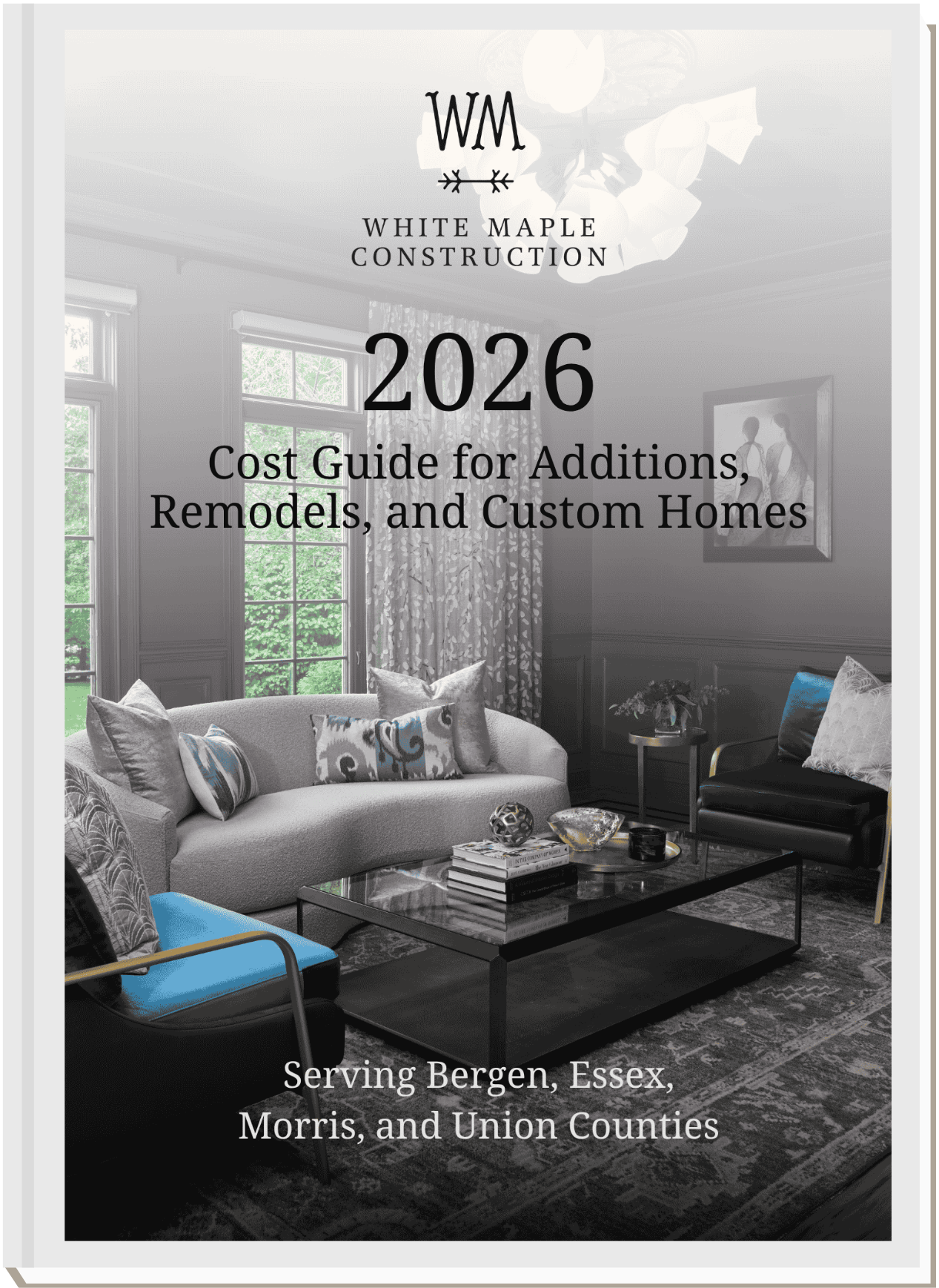
Download Our Cost Guide to Understand Everything in a Custom Home Build or Remodel Budget
What the First Build Actually Looks Like
For a large-scale whole-home expansion or custom new build, the First Build might span 24 weeks, coordinating structural steel engineering, a 4-zone HVAC redesign, and the procurement of a custom roofing package, all resolved before site mobilization.
For a multi-faceted addition with several simultaneous “micro-additions,” it means finalizing siding specifications and trim profiles so that the new framing meets the original structure with zero-defect precision. For a century-old heritage home, it means scheduling floor leveling and custom millwork phases in an integrated sequence, preventing the “domino effect” of delays that’s endemic to older-home renovations.
In each case, the benefit to you is the same: when construction begins, the crew is executing, not deciding.
Three Financial Milestones Covered in the Two-Build Method
The Two-Build Rule shapes how your project’s budget evolves, and we’re transparent about that evolution from day one.
The Discovery Call is where we align your vision with real regional cost benchmarks. It’s also where we evaluate whether your project scope and our minimum requirements are a fit, before anyone invests time in formal design.
The Conceptual Budget follows shortly after. This is a data-driven investment range built from historical project benchmarks and current market rates. Its purpose is to test financial feasibility early, before capital is committed to architecture, engineering, or detailed design work. If the numbers don’t align with your goals, you find out now, not six months from now.
Finally, the Construction Cost Specification is where it all comes together. Produced only after the First Build is complete, it’s our team’s detailed pricing of your project based on 100% of your actual selections, confirmed labor costs, and firm commitments from our trade partners — no allowances standing in for decisions that haven’t been made yet. We present it to you as your fixed-price Construction Contract: the number is real because every decision behind it is already made.
This structure means the number in your Construction Contract — the fixed price you commit to at the close of the First Build — is built on your actual selections and firm trade-partner pricing, not allowances standing in for decisions you haven’t made yet. No builder can price what’s hidden behind a wall — but we eliminate the avoidable surprises, the ones that come from decisions left unresolved and selections left to chance. That’s the difference between a budget that drifts and one you stay in control of.
Why Building in Northern New Jersey Is More Complex Than Most Homeowners Expect
New Jersey operates under its own Uniform Construction Code, but the way that code gets applied is different in every municipality. Bergen, Essex, Morris, and Union Counties are home to more than 150 individual municipalities, each with its own zoning ordinances, building department, permit review timeline, and interpretation of what requires board approval. What’s a straightforward permit in one town can require a Zoning Board hearing in the next.
The level of scrutiny scales with the project. A custom home build faces the most rigorous zoning and permitting review; an addition is next; and an interior remodel that stays within the existing footprint is generally the most straightforward. The dividing line is whether you change the home’s footprint or height. Any time a project expands either one — as a custom home or an addition does — it triggers a review against that town’s bulk standards: setback distances from property lines, maximum lot coverage, and building height limits. In Northern NJ, residential height is commonly capped at 35 feet, and building and impervious coverage limits, governed by New Jersey’s Municipal Land Use Law, are strictly enforced. If your planned home construction pushes against any of these thresholds, even marginally, you may need to apply for a variance before a permit can be issued. That process involves appearing before a Planning Board or Zoning Board of Adjustment, providing formal documentation, and waiting for a scheduled hearing. It can add weeks or months to a project timeline if it isn’t identified and planned for in advance.
Essex County adds another layer of complexity for older homes. Municipalities like Montclair have designated historic districts where renovation plans face extended review periods and specific aesthetic requirements, even for projects that would sail through permitting elsewhere. Morris County projects near wetlands or environmentally sensitive areas can trigger additional state-level environmental reviews on top of the local process.
Permitting timelines vary across the region as well. For the scale of project we take on — additions, whole-home remodels, and custom builds, all of which require architectural plans — initial permit review typically runs four to six weeks, with additional rounds of comment and resubmission able to extend that further. Permit offices are not immune to staffing fluctuations, and summer months can run more slowly than the rest of the year.
None of this is insurmountable. But all of it needs to be accounted for before a project schedule is set and before a contract is signed. A builder who encounters zoning issues after construction begins has no good options. A builder who identifies them during the First Build can navigate them on your behalf, without disrupting the timeline or the budget.
That’s the practical case for pre-construction rigor in this specific market. The Two-Build Rule isn’t a philosophy. In Northern New Jersey, it’s the only responsible way to build.
Ready to See How Your Project Maps to a Benchmark?
Our 2026 Cost Guide walks through eight real project models, from a $550K first-floor remodel in Bergen County to a $2.7M custom home in Morris County, with per-square-foot costs, scope summaries, and the specific pre-construction factors that shaped each budget.
If you’re beginning to think seriously about an addition, remodel, or custom home, the Discovery Call is the right first step. It’s complimentary, and it’s designed to give you a clear-eyed picture of what your project actually involves before you commit to anything.